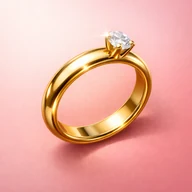
Can you resize a ring?
Many gold, silver and platinum rings can be resized, but the safe amount depends on their construction, condition and settings—not a universal two-size limit. Ceramic and tungsten bands normally need an exchange or remake instead of traditional resizing. Ask the maker about the exact design before ordering or altering it.
A ring that does not fit is not necessarily a lost purchase. But “we can always resize it” is not a safe buying assumption either. The metal, setting, condition and retailer’s terms decide which options remain available. Start with an assessment of the particular ring, not a rule based only on its material.
Which ring materials can be resized?
| Material | Resizable? | What to check |
|---|---|---|
| Gold | Often | Alloy, shank condition and design |
| Sterling silver | Often | Stones, finishes and construction |
| Platinum | Often | A workshop experienced with the alloy and setting |
| Palladium | Design-dependent | The workshop’s capabilities |
| Titanium | Usually restricted | The maker’s assessment of this construction |
| Tungsten carbide | Not by conventional resizing | Exchange or remake terms |
| Ceramic | Not by conventional resizing | Exchange or remake terms |
| Carbon fibre or wood inlay | Construction-dependent | The core, inlay and maker’s repair options |
| Silicone | Choose another manufactured size | The maker’s chart and fit guidance |
Traditional resizing alters a compatible metal band and restores its shape and join. It is not simply a question of hardness. Settings, inlays, coatings and previous repairs can rule out work that would be straightforward on a plain band of the same metal. Blue Nile’s resizing overview explains common methods and why the design matters.
Before buying a restricted design, try the maker’s sizing kit or a closely matched physical gauge. Check exchange eligibility, return condition and any remake charge in writing. Do not automatically choose the larger of two conflicting measurements; resolve why they differ.
Can a ring be resized bigger?
A jeweller may enlarge a suitable metal ring by cutting the shank and adding a matching piece. Some plain bands can be stretched, but stretching is not appropriate for every construction. The workshop must consider thickness, shape, finishes and any stones before choosing a method.
Adding metal requires a compatible alloy, a sound join and restoration of the finish. Ask whether the proposed work will affect engraving, a pattern or the appearance of the shank. Do not attempt to force the ring onto a mandrel at home: a tool that shows size is not permission to stretch the ring.
Can a ring be resized smaller?
A conventional reduction often involves removing a section of the band, bringing the ends together and joining them. Reshaping can affect the setting as well as the circumference, so a reduction is not automatically safer than an enlargement.
If the ring only spins at the finger base but already fits tightly over the knuckle, reducing the whole band may make it difficult to remove. Explain both parts of the fit to the jeweller. The guide to stopping a ring from spinning helps you separate a loose band from a top-heavy setting or a knuckle-clearance problem.
How many sizes can a ring move?
There is no safe maximum that applies to every ring. A workshop needs to inspect the original size, requested size, shank thickness, head and settings. A small adjustment can be unsuitable for one design while a larger alteration is possible on another.
Ask the jeweller to distinguish what is technically possible from what they recommend for the ring’s long-term condition. Replacing a worn shank or remaking a band may be preferable to repeatedly cutting and reshaping it. A promise such as “up to two sizes” should be confirmed for your exact ring and direction of change, not borrowed from a different product.
Can ceramic rings be resized?
A ceramic band normally cannot be resized using the cutting, joining and shaping methods used for a precious-metal ring. For example, Jewelry by Johan explicitly marks its black ceramic wedding band as not resizable. That is a reason to check the maker’s policy before purchasing, not a promise that every retailer offers the same remedy.
If your ceramic ring is too small, ask about an exchange or replacement. If it is loose, ask whether a temporary insert is compatible with the ring and your knuckle clearance; an insert changes the fit without resizing the ceramic itself. Do not try to heat, stretch, grind or clamp the band at home.
For a new ceramic ring, check the maker’s chart and try a gauge with comparable width and inside profile. A comfort-fit interior may feel different from a flat one, but that does not justify a universal instruction to buy half a size smaller. Confirm the actual design and return conditions.
Which settings make resizing difficult?
Full eternity bands have stones around the circumference, potentially leaving no plain section to alter. Whether a particular band can change size needs the maker’s assessment. The dedicated eternity ring resizing guide compares full and half bands, enlargement, reduction and alternatives.
Tension settings depend on the construction holding the stone securely. Channel-set and pavé bands may also need extra setting checks when reshaped. An engraved or patterned shank can require restoration at the join. Ask what can be preserved and what may visibly change.
For an antique or previously repaired ring, the condition matters as much as the original design. Bring any repair history you have and ask the workshop to inspect thin sections before quoting. The vintage ring guide covers those pre-purchase checks.
Can this exact ring be resized to the proposed size? What happens to its stones, engraving, finish and warranty? Request an assessment and written quote before an alteration begins.
What does ring resizing cost?
Prices vary by market, material, workshop and complexity. Request an itemised quote after an inspection rather than budgeting from a universal online price. A plain band and a worn stone-set ring can need very different work even if both change by one size.
Ask whether the price includes added metal, setting checks, necessary stone work, engraving restoration and polishing. If your white-gold ring is rhodium-plated, ask whether restoring that finish is included. Not every white-gold ring has the same alloy or finish.
When comparing quotes, check shipping and insurance as well. A lower headline price may omit work included elsewhere. If the seller advertises a free resize, verify eligible designs, time limits and whether a second adjustment would be charged.
How long does resizing take?
Timing depends on the workshop queue, shipping, materials and any repairs found on inspection. The retailer’s current estimate is more useful than a general promise of a fixed number of days. Ask whether work happens on site or the ring goes to another workshop.
If the ring is needed for a ceremony, request a completion date and leave time to check the finished fit. Confirm whether the estimate includes postage in both directions and what happens if further work becomes necessary. Photograph the ring’s condition before handover and retain the intake description and agreed instructions.
What are the alternatives to resizing?
Sizing beads or inserts can help some loose rings sit more securely. They also reduce internal clearance, so they may affect passage over the knuckle. A jeweller should assess comfort and compatibility rather than treating an insert as a universal substitute for changing the band.
A specialist hinged shank can let some wearers bypass a difficult knuckle. Compare security, maintenance, cost and design compatibility with other options. A jewellery fitting does not diagnose or treat joint swelling; unexplained or painful swelling needs medical advice.
Temporary ring guards may help with a mildly loose ring while you assess a stable fit. Check for rubbing and trapped moisture, and stop using one if it causes discomfort. An exchange or remake may be the better route for a non-resizable ring or a major design change.
What should you do before booking a resize?
Check the retailer’s return, exchange and resize terms before another workshop alters the ring. Time limits, custom-order exclusions, engraving and wear conditions vary. Outside work can affect eligibility, so ask which next step preserves your options.
Then confirm the target fit under ordinary conditions on more than one occasion. If recent weight change or temporary swelling explains the problem, discuss whether a permanent alteration is appropriate now. Do not pay to resize a ring to a number produced by the same unchecked measurement that caused the original mismatch.
The ring-doesn’t-fit checklist helps you organise measurements, return terms and the questions to take to a jeweller.
For ceramic specifically, the next decision is usually an exchange rather than a traditional resize. Use the ceramic ring sizing and exchange checklist to confirm the seller’s rules before ordering.