Can an engraved ring be resized without losing the inscription?
An engraved ring may be resizable, but preserving the original inscription depends on the ring and the proposed work. Ask a qualified jeweller to inspect the metal, settings, engraving location and condition. Photograph the inscription privately, agree what may change and obtain approval terms before resizing or re-engraving begins.
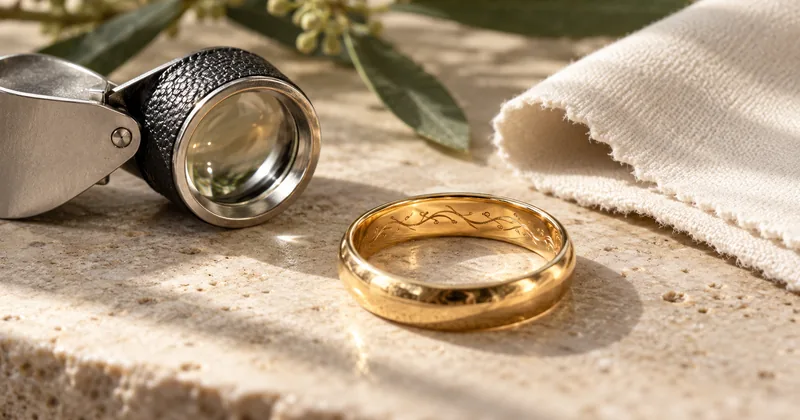
A ring can have two kinds of value at once: it needs to fit, and the original inscription may be part of what makes it yours. “Can you make it smaller?” does not fully describe that brief. Tell the jeweller whether preserving the exact original marks matters more than recreating the same words in a fresh engraving.
This guide explains the questions and records to prepare before a repair. It does not determine whether a particular ring can be altered, identify its metal from a photograph or promise that an inscription can be restored. The general resizing guide covers the wider material and setting questions. Here, the additional issue is what happens to the marks you want to keep.
Why does the inscription affect the repair plan?
Jewelers of America’s repair guidance notes that the usual position for a sizing join may need to change when quality marks or an inscription are present. That supports a practical request: show the jeweller every mark you want considered before the work is scoped, rather than mentioning the engraving only when the resized ring is ready to collect.
Ask which part of the ring would be affected and whether the words, decorative pattern or other marks lie in that area. The answer may depend on the direction and amount of the size change, available sound metal, previous repairs and the ring’s construction. A plain uninterrupted section and a continuous pattern do not present the same planning problem.
Do not assume that moving the proposed work automatically solves everything. Request an inspection of the complete piece, including stones and the remaining shank. An engraving preservation preference should be part of a feasible repair, not a reason to bypass the condition checks that make the repair appropriate.
Document the original before discussing changes
Take clear private photographs of the inner and outer surfaces if you can handle the ring safely. Photograph several views so that lighting does not hide faint characters. Transcribe the inscription separately, preserving punctuation, spaces and any uncertain character. Write “unclear” where necessary instead of guessing what a worn mark says.
Separate personal engraving from hallmarks, maker’s marks, size labels and serial markings. The ring-markings guide explains why a number inside a ring does not automatically state its size. Ask the workshop to identify which marks the proposed work may affect; this article is not an authentication or hallmark-identification service.
Keep those images with your own records and share only the relevant views with the chosen repairer. There is no need to publish a private date, message or identifying number in a public product review to explain that a ring needs resizing. A neutral description is often enough for an initial general enquiry.
Agree whether preservation or re-engraving is acceptable
“Keep the engraving” can mean preserve the original physical marks, preserve their appearance, or preserve the wording through re-engraving. Those are different permissions. Tell the jeweller which outcome you want, and ask them to distinguish what they expect from what they cannot guarantee before they inspect or begin work.
If re-engraving is proposed, ask about text, position, style and any limits imposed by the remaining surface. Request a separate approval point for replacing or changing an inscription. Do not assume that a quoted resize automatically includes recreating a hand-cut message or matching an old decorative pattern exactly.
For a legacy or inherited piece, the original marks may be more important than a cosmetically new surface. Say that explicitly. The vintage-ring inspection guide adds the questions about wear, old repairs and delicate finishes. The workshop should explain which proposed changes serve fit, which serve appearance and which are optional.
Confirm that resizing is the right next step
Before authorising permanent work, establish why the fit needs to change. A ring that is loose after one unusually cold day presents different evidence from a ring that consistently slips off under ordinary conditions. Keep repeated measurements and observations rather than choosing an alteration solely from one uncomfortable session.
If weight change is part of the history, use the weight-change guide to organise comparable readings without inventing a pounds-to-size formula. If the issue is joint clearance but looseness at the base, discuss the complete fit problem. Simply reducing the opening may preserve neither comfortable removal nor everyday security.
Alternatives may be worth discussing with the jeweller, but none is automatically harmless to an engraved surface. Ask how a proposed insert or fitting feature would contact the inscription and how it would be maintained. Do not glue a household material inside the band or alter the engraved area yourself to avoid obtaining a professional assessment.
A repair brief with explicit approval points
Use a short written brief rather than a broad instruction to make the ring fit “as new”. The example below is a checklist format, not a repair specification suitable for every ring. Ask the workshop to fill in the technical decisions after inspection, and keep a copy of the agreed scope with its own estimate.
| Decision | What to agree |
|---|---|
| Fit | Intended finger and physically checked candidate size |
| Condition | Existing wear, repairs and setting concerns |
| Original marks | Inscription and other marks to preserve |
| Proposed change | Areas affected and expected appearance |
| Re-engraving | Whether it is permitted, with separate text approval |
| Unexpected findings | When work must stop for your decision |
| Collection | Fit, inscription and condition checks |
Ask about timing and price for the actual scope, including any separately approved restoration. This guide does not supply a reliable universal cost or number of sizes a ring can move. A current written estimate for your piece is more useful than a generic price attached to an unrelated design in an online discussion.
Keep measurements separate from the private inscription
The Ring Sizer app can retain measurements with method, date and notes. Use that record for the intended finger, original units and a neutral description of the fitting discussion. It does not need to contain a private message, personal date or serial number to remain useful. Keep detailed inscription photographs in a place you choose for private repair records.
Official Google Play screenshots, captured in English on Android. These images are not a calibrated measuring surface. App versions and reference charts may round size labels differently; keep your raw millimetre measurement and check the seller’s chart.
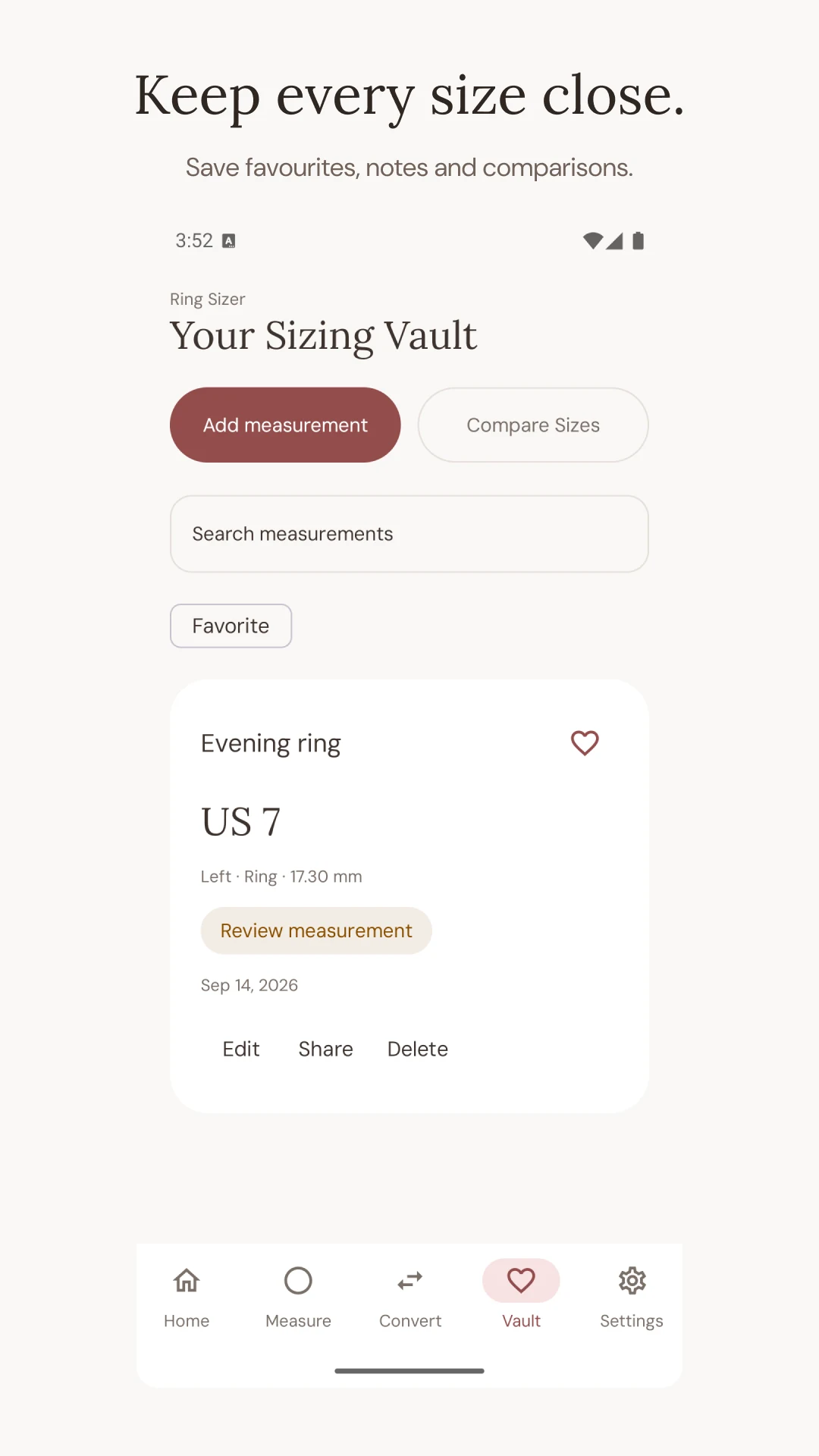
The real Android screenshot illustrates the app’s existing saved-record feature. It is not a claim that the app can assess metal, approve a resize or reconstruct lettering. The store listings describe measurement and record tools, not a jeweller’s condition report. Check feature access in the version you use and preserve the original reading when adding a proposed new size to the note.
When collecting the ring, check the agreed fit and inspect the inscription and surrounding finish with the repairer. Compare the outcome with the approved scope, and raise any difference before treating the job as settled. A successful conversation accounts for both the ring’s wearability and the particular marks you asked the workshop to respect.